
What Has Shaped Me Most as a Teacher
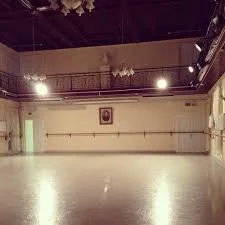
What has shaped me most as a teacher did not happen at the beginning of my teaching.
It came much later.
By that point, I had already been teaching for many years—close to eighteen. I knew what to give. I knew the material. I knew how to run a class. But when I stepped into a university setting and was asked to teach students how to teach, I remember thinking very honestly:
I don’t know how to do that.
What made that moment even more challenging was realizing that I couldn’t clearly trace my own training back to its beginnings.
I couldn’t tell you exactly what I learned in my very first ballet class, or how those foundational skills were introduced. Much of that learning had been absorbed over time.
But now I was being asked to teach that process from the beginning.
That was eye-opening.
I needed something that could guide me—not just in what to teach, but in how to introduce it for the first time.
That is where the Vaganova method became a valuable roadmap.
It provided a clear structure—a logical progression of movement, and a way of introducing complexity through appropriate prerequisites.
But I was working in a very different context.
In Russia, students train many hours each week. In the United States—especially in many schools—we may see students once a week, perhaps thirty classes a year. It was not realistic to cover the same volume of material.
So I had to learn how to adapt that structure—to decide what was essential, and how to pace it in a way that made sense for the environment I was in.
That helped me understand the what and the when.
But that is only part of teaching.
The deeper shift came in realizing that teaching is not only about following a progression. It is about teaching the dancer in front of you.
That is where my focus moved more fully into the why and the how.
Over time, that led me to something that has deeply shaped my teaching:
You cannot teach everyone the same way.
Even within the same exercise, each student may need something different—physically, cognitively, and developmentally. The work is not simply delivering material, but learning to see what is in front of you.
That was a defining shift for me.
Not learning more steps—
but learning to see more clearly.